Following is the link for
Parshas Behar.
With wishes for a peaceful and uplifting Shabbos.
|
|

Copyright © 2014. All Rights Reserved.
|
|
In Chabad there are three forms of hitbon'nut (contemplation, meditation):
(a.) Study-meditation: After mastering the concept thoroughly, one meditates on its profundity, until the intellectual element shines forth for him.
(b.) Meditation before davening: This is directed toward sensing the vitality of the concept learned, in contrast to sensing the intellectual element emphasized in study-meditation.
(c.) Meditation in davening: To sense the "G-dly element" in the concept learned.
These three are rungs on the ladder of sensitivity. It is only by G-d's kindness towards us that we may occasionally sense G-dhood spontaneously, without any avoda at all. This comes about by virtue of the quality of Ultimate Essential G-dhood1 within the soul. For avoda by one's own efforts, however, these three forms of meditation are essential.
Which Siddur?
OK I admit it, I have a problem. I collect siddurim. Which do I use? Almost
all of them. Depends on my mood or Mochin gadlus or katnus - small minded or
expanded consciousness.
Keser Nehora - Berditchiver Siddur - I have two of them I recieved from my
Rebbe himself.
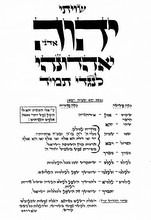
Ksav Ashuris - Ashurite Torah Script Siddur - This handwritten siddur is
always on my Rebbe's shtender.
Shela HaKadosh Siddur - Bach's Haskama says if you daven from it your prayes
will be answered. The Sulitza rebbe shlita (whom I was close to when I lived
in the US) uses this.
Rav Yaakov Emden - Yaabetz Siddur - I have my Rebbe's old one, I use for
Kiddush Friday nights (has his wine stains) My rebbe uses this for special
occasions, Seder Night, Shofar Blowing etc.
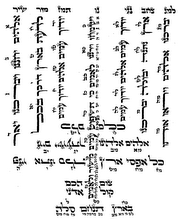
Arizal Siddurim - these are full of Kabbalistic Yichudim and Divine Names
(my Rebbe uses them during Shaking of the Lulav).
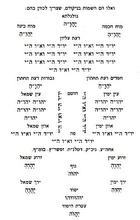
Toldos Aharon's Siddur - Standard Nusach Sefard, small size clear print and
has Shem Havayah with Shiluv Adon"y and Tefillos from rav Arele and other
Tzadikim
Biala Siddur - Also in Ashuri script, but printed as opposed to hand
written, easier to read, has interesting minhagim and commentaries
Ben Ish Chai Siddur and Lashon Chachamim - I used this one for years till it
fell apart and recite many of his tefilos
Avodas Elimelech - A siddur with Rebbe reb melech's commentray collected
from Noam Elimelech
Tzolasa D'Yisroel - A siddur with Baal Shem Tov's commentray collected from
many seforim
I switch off. But on a daily basis I use Keser Nehora - Berditchiver Siddur.
Sometimes I try to have in mind the kavanos.
Which Siddur inspires you?
Someone once asked me how in the world could I concentrate with my eyes
closed, without looking in the siddur?
The truth is, I look in the siddur for most of davening, its only the
amidah, the silent shemoneh esrei where the conflict begins...
On the one hand we always say osios machkimos - the letters make one wiser.
There is a spirtiual light within the holy letters of the Hebrew language.
Especially if we see them written in Kesav Ashuri like in the Sefer Torah.
On the other hand, when I close my eyes, my concentration is so much
stronger, nothing to see and distract me. My mind begins to focus inward.
Sometimes I can see the letters in my mind. I draw them like glowing coals
in my mind's eye.
Other times I am free of letters, no letters just thoughts.
Still other times the kaleidoscope of images in my minds eye explodes with
brilliant colors, shapes and forms, full of the fire of prayer.
Some people close their eyes to escape and to stop seeing the world.
Some people only see the world for the first time truly, when they close
their eyes.
Like Rebbe Nachman's story about the Beggars, the Blind Beggar sees the
reality so much that he is blind to the falsehood of the physical world of
lies.
What do you see when you close your eyes?
How do I try to achieve dveykus?
It depends on my mood and my emotions.
Do I feel happy, sad, depressed, joyful, energetic, lethargic, bitter-sweet,
aflame, ecstatic, tired, burned out, excited?
Each feeling and emotion force me to try a new method:
Sometimes I use a siddur, and sometimes I close my eyes.
Sometimes I saw gently and Sometimes violently.
Sometimes I gesticulate and gesture and Sometimes I stand still like a stone
statue in awe.
Sometimes I daven silently with only my lips moving, and Sometimes with in
silence I scream.
Sometimes I chant tunelessly and Sometimes I sing a niggun in my mind.
Sometimes I daven fast and Sometimes slow.
Then come the dangerous questions:
(When) Do I sacrifice halacha for dveykus?
Do I go back and repeat words, or is that assur?
Do I chase away foreign thoughts or try to uplift them?
Do I meditate or daven?
Do I pray for solely for physical needs or spirtual ones?
Do I skip parts of the service to keep pace with the chazan or do I just
daven at my own pace anyway?
Do I add my own words (even in another language) to the davening or leave it
as is?
Do I daven in shul, or stay home and daven without a minyan for better
concentration and a slower pace?
Do I let zman tefillah or krias shema pass or even disregard and forget
about them completely?
What about preparation, tehillim, mikva, learning before davening and
davening before davening?
maybe there is too much I. Maybe my dveykus is a lie.
Is the quest for dveykus just the yetzer hara?
maybe I am chasing a dream.
Maybe I should just give up and daven like everyone else.
Or maybe that is the yetzer hara telling me to give up?
Do you give up? Sometimes I do...
Sometimes I dont give up, and just keep trying.
Kol Tuv,
R' Tal Moshe Zwecker
Director Machon Be'er Mayim Chaim
www.chassidusonline.com
chassidusonline@gmail.com
info@chassidusonline.com
Phone: 972-2-992-1218 / Cell: 972-54-842-4725
VoIP: 516-320-6022
eFax: 1-832-213-3135
join the mailing list to keep updated about new projects here:
http://groups.google.com/group/beermayimchaim
Kol Tuv,
R' Tal Moshe Zwecker
Director Machon Be'er Mayim Chaim
www.chassidusonline.com
chassidusonline@gmail.com
info@chassidusonline.com
Phone: 972-2-992-1218 / Cell: 972-54-842-4725
VoIP: 516-320-6022
eFax: 1-832-213-3135
join the mailing list to keep updated about new projects here:
http://groups.google.com/group/beermayimchaim